

How Many Animals Died In Bp Oil Spill
A contempo Endangered Species Research special upshot summarizes some of the devastating longterm effects of the Deepwater Horizon oil spill on protected marine mammals and bounding main turtles. The upshot compiles 20 scientific studies authored by NOAA scientists and partners covering more than than five years' worth of data collection, analysis, and interpretation. The research indicates that populations of several marine mammal and sea turtle species will take decades to rebound. Significant habitat restoration in the region volition besides be needed.
NOAA scientists used a variety of cutting-edge research methods in these studies and many others every bit part of a Natural Resource Impairment Assessment. This is the legal process where nosotros investigate the type of injuries caused by the oil spill, quantify how many animals were harmed, develop a restoration plan to compensate for the natural resource injuries, and concord responsible parties liable to pay for the restoration.
1. The largest offshore oil spill in U.S. history
As the largest offshore oil spill in U.S. history, the Deepwater Horizon oil spill released 134 one thousand thousand gallons of oil into the Gulf of Mexico over a period of 87 days, fouling ane,300 miles of shoreline along five states. The scientists ended that the Deepwater Horizon oil spill killed thousands of marine mammals and sea turtles, and contaminated their habitats.
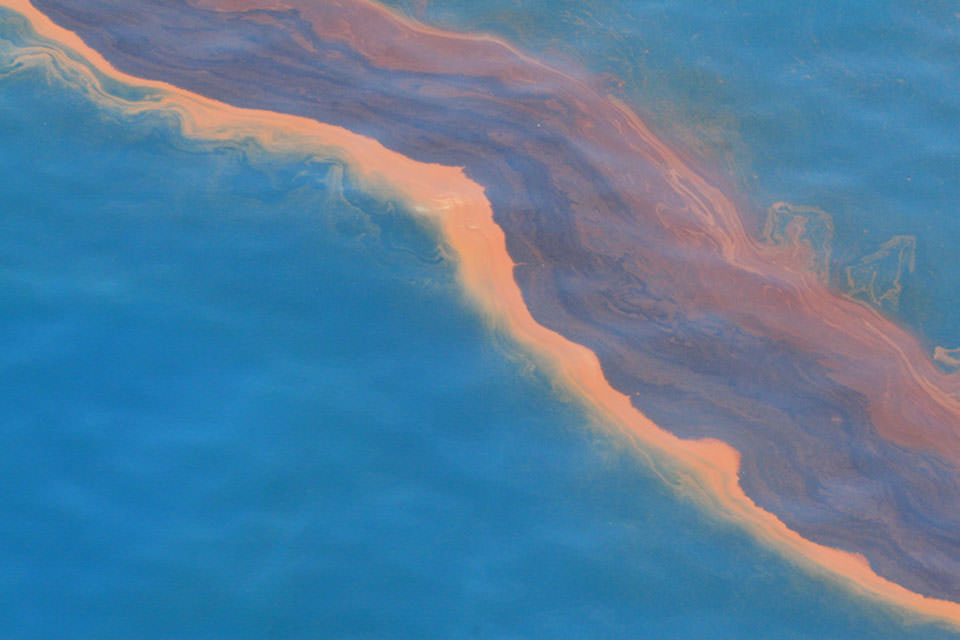
Heavy ring of oil seen during an overflight on May 12, 2010. Download
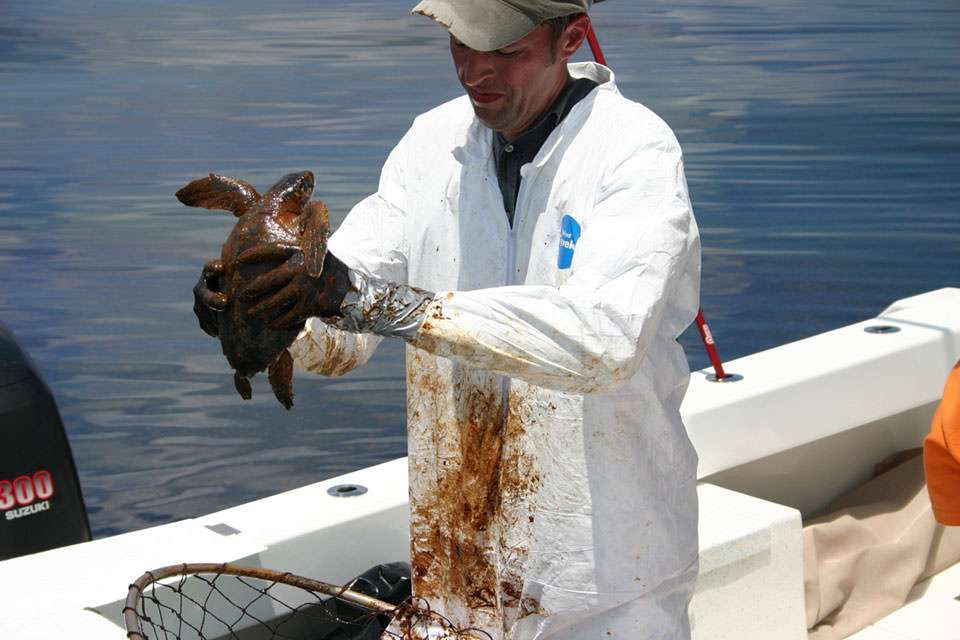
Dr. Brian Stacy, NOAA veterinarian, prepares to clean an oiled Kemp'due south ridley turtle. Veterinarians and scientists from NOAA, the Florida Fish and Wildlife Commission, and other partners working under the Unified Command captured heavily-oiled young turtles 20 to 40 miles offshore as part of ongoing animal rescue and rehabilitation efforts. Credit: NOAA and Georgia Department of Natural Resources. Download
2. Thousands of protected species were exposed to oil throughout their habitats
The northern Gulf of Mexico is habitation to 22 species of marine mammals, including manatees in coastal seagrasses and dolphins and whales in estuarine, nearshore, and offshore habitats.
V species of sea turtles live in the Gulf of Mexico: loggerhead, Kemp's ridley, green turtle, hawksbill, and leatherback. All of these species are protected under the Endangered Species Human activity. The Gulf of Mexico provides critically important habitats for sea turtle reproduction, feeding, migration, and refuge, including all-encompassing Sargassum habitat in the open ocean that small juvenile turtles depend on for survival.
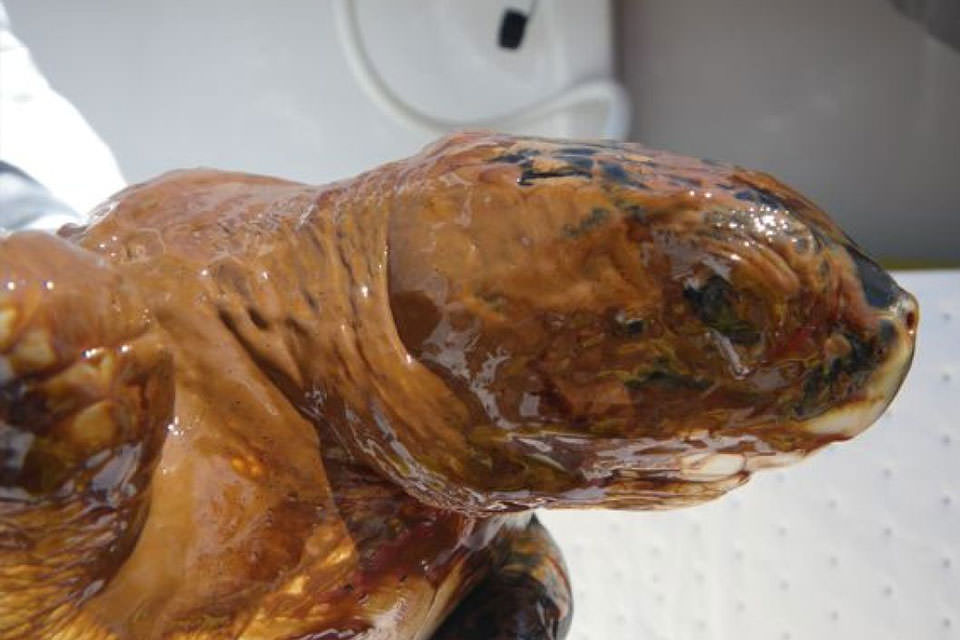
Oiled Turtle. Shut-up of an oiled Kemp's ridley turtle captured during a June 1, 2010 survey. The turtle was cleaned, provided veterinary care, and taken to the Audubon Aquarium. Efforts continued throughout the elapsing of the spill to assess the condition of these endangered sea turtles and to capture turtles caught in heavy oil. Download
The scientists adamant that four species of sea turtles (Kemp's ridley, loggerhead, green turtle, and hawksbill) and their habitats were exposed to Deepwater Horizon oil in the open ocean, across the continental shelf, and into nearshore and coastal areas, including beaches. A fifth species, the leatherback, was likely exposed to Deepwater Horizon oil, and some exposed leatherbacks probable died.
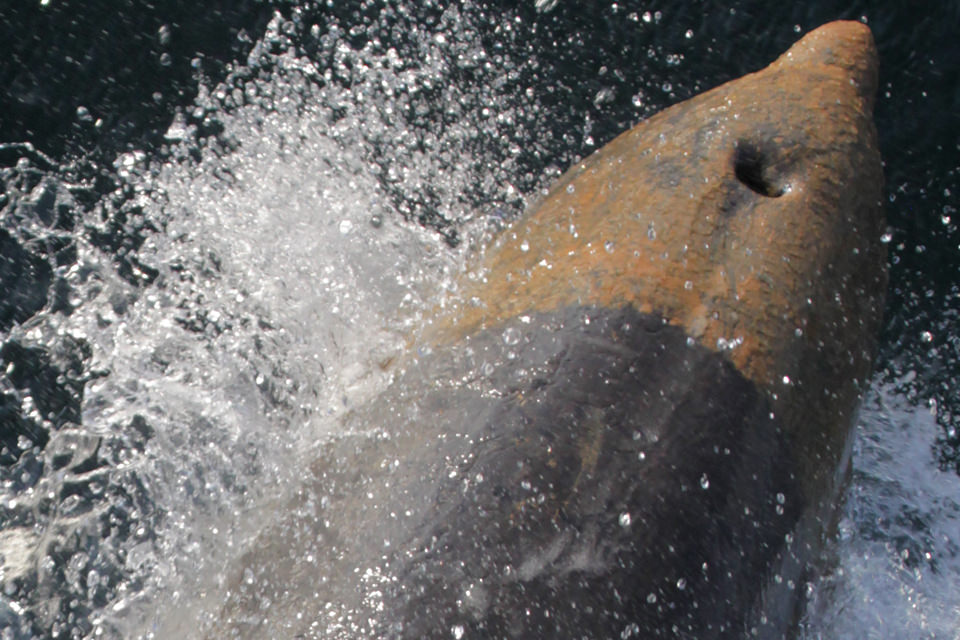
Bottlenose dolphin with oil adhered to the caput, July 2010. The oil spill contaminated prime number marine mammal habitat in the estuarine, nearshore, and offshore waters of the northern Gulf of Mexico. Photo taken nether research permit. Download
Deepwater Horizon oil contaminated every blazon of habitat that northern Gulf of Mexico marine mammals occupy.
3. We investigated the types of injuries
To make up one's mind the types of injuries to whales and dolphins due to the spill, the scientists collected a variety of information, including field studies, stranded carcasses, historical information on marine mammal populations, and toxicity testing studies.
Marine mammals and body of water turtles may have been exposed to the oil by inhalation, aspiration, ingesting contaminated sediment, water, or prey, or by absorbing contaminants through their skin.
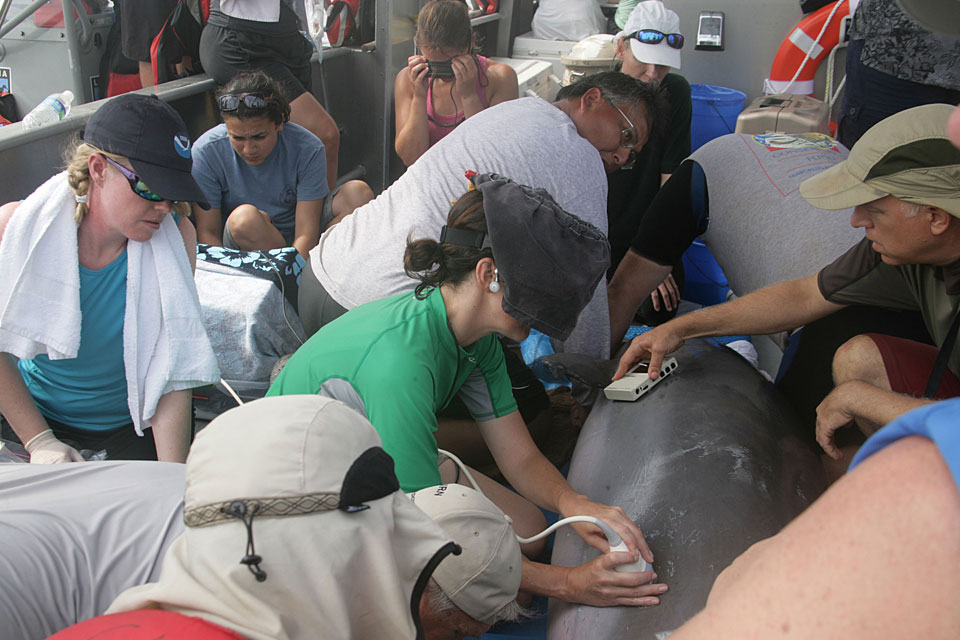
A veterinarian performs an ultrasound to assess a Barataria Bay dolphin's health in Aug. 2011. As before long as the examination was complete, the dolphin was returned to the water. Photo taken under inquiry permit. Download
Marine mammal researchers concluded that exposure to the oil caused a wide range of agin health effects such as reproductive failure and organ damage, and that animals killed by these adverse effects contributed to the largest and longest marine mammal unusual bloodshed event always recorded in the Gulf of Mexico.
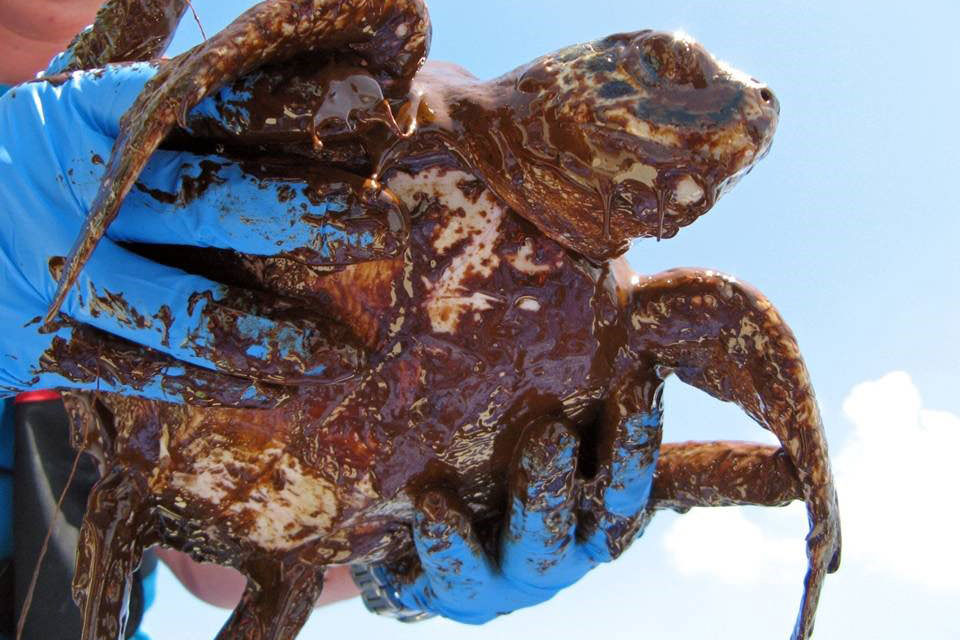
Juvenile Kemp's ridley sea turtle oiled in the Deepwater Horizon spill in 2010. Photo Credit: Blair Witherington, Florida Fish and Wildlife Conservation Commission Download
Miring in oil and exposure to oiled surface habitat acquired significant damage to sea turtles, including decreased mobility, burnout, dehydration, overheating, likely decreased ability to feed and evade predators, and decease.
iv. We quantified how many animals were harmed
Examples of impacts to species included: upwards to xx percent of all oceanic juvenile Kemp'south Ridley sea turtles present during the Deepwater Horizon oil spill perished from oil exposure; and oil-associated wellness effects to Barataria Bay, Louisiana, bottlenosed dolphins reduced their survival and reproductive success in years following the spill, leading to a l percent turn down in the population, according to NOAA scientists and partners.
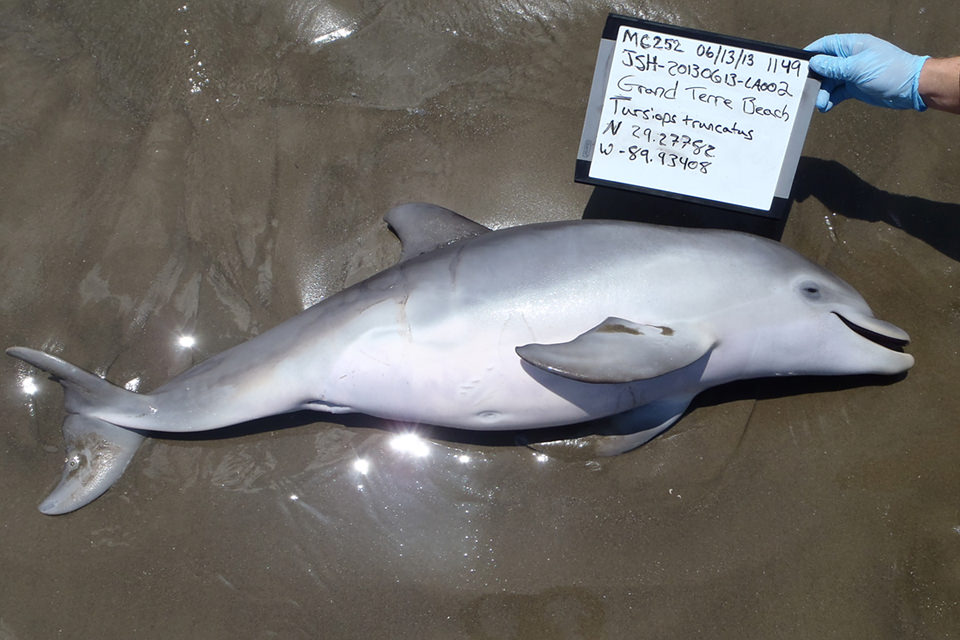
Dead bottlenose dolphin dogie stranded on Grande Island, Louisiana, in 2013. There was an increase in dolphin strandings in the northern Gulf of Mexico for several years following the Deepwater Horizon spill. Findings from the dead animals supported evidence of decreased survival and reproductive rates establish in live animal studies. Credit: Louisiana Department of Wild fauna and Fisheries Download
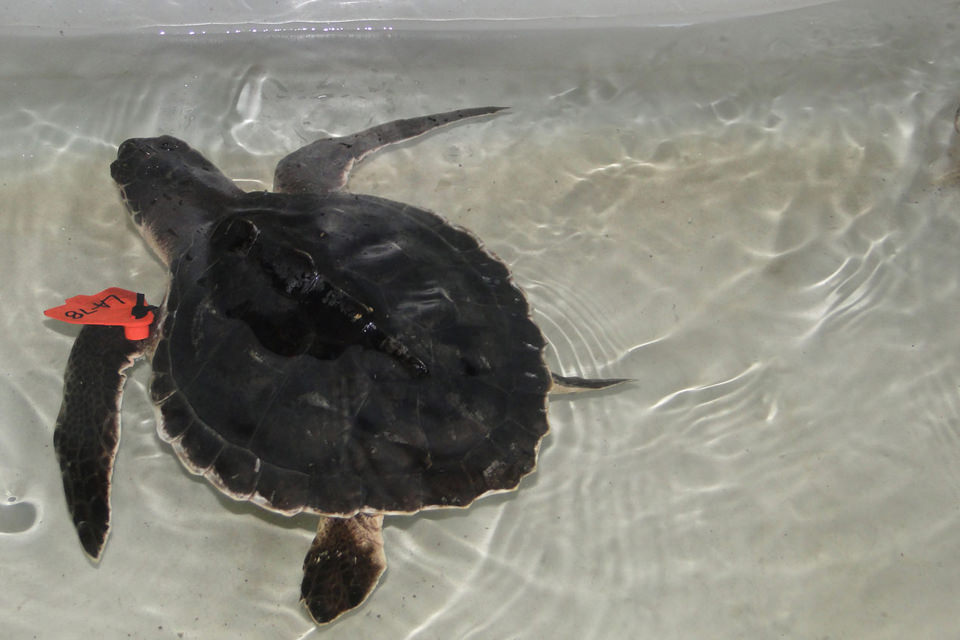
Kemp's ridely turtle after cleaning and treatment. Distressed and oiled turtles recuperated at the Audubon Nature Institute during the spill in 2010. Download
5. Nosotros planned the restoration
Findings from these research studies, in addition to other studies on other parts of the ecosystem, formed the ground of the natural resources damage cess settlement with BP for up to $8.8 billion for restoration projects.
Considering marine mammals confront a broad range of threats, a portfolio of restoration approaches include: decreasing and mitigating interactions with commercial and recreational fishing gear, characterizing and reducing impacts from noise, reducing illegal feeding and harassment, and increasing understanding of causes of marine mammal illness and death.
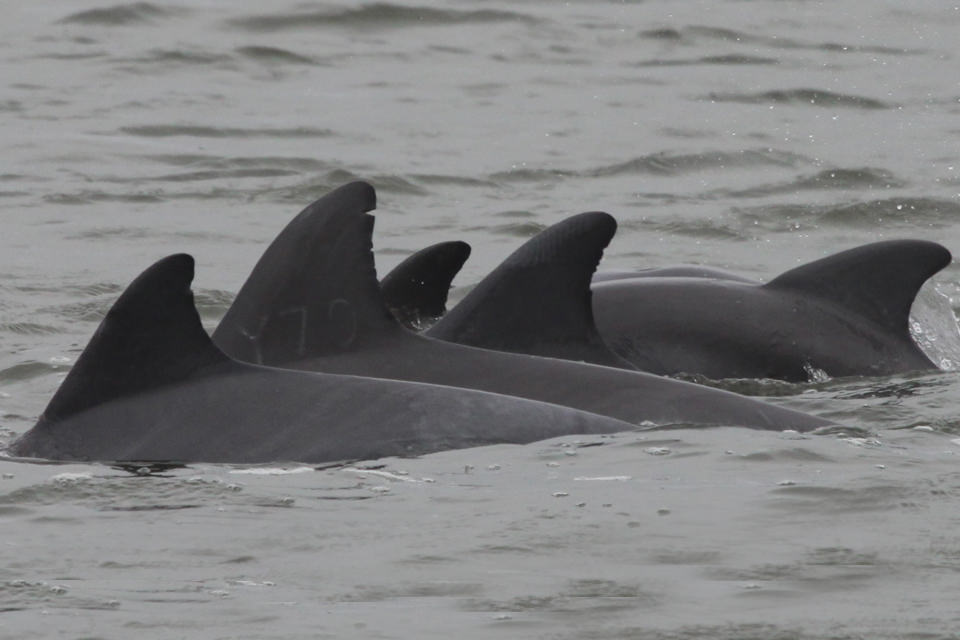
A group of dolphins photographed in May 2015 during monitoring surveys in Barataria Bay, Louisiana. The faint markings on 2nd fin indicate the dolphin is "Y79", a subadult female dolphin that had been temporarily captured for health assessment the prior year. Photo taken under research permit. Download
Specific activities for sea turtles could include reducing fisheries bycatch, enhancing body of water turtle stranding response and mortality investigation, and improving nesting habitat by protecting nests and reducing bogus sources of light that can disorient hatchlings at dark.
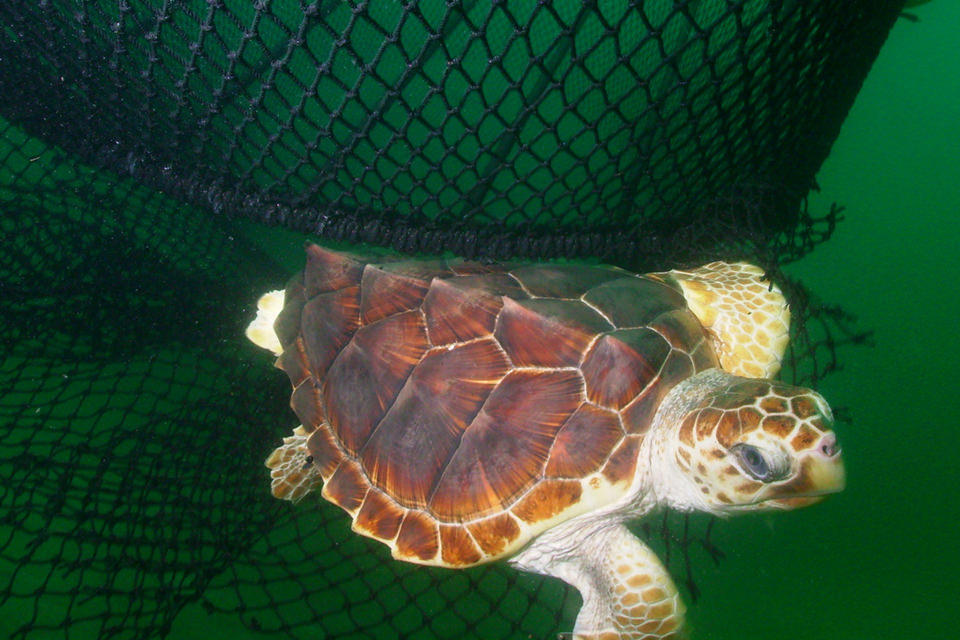
Turtle excluder devices on nets allow bounding main turtles to escape unharmed. Restoration activities could include promoting the apply of such devices. Download
Source: https://oceanservice.noaa.gov/news/apr17/dwh-protected-species.html
Posted by: harnishfaillims90.blogspot.com
0 Response to "How Many Animals Died In Bp Oil Spill"
Post a Comment