

What If Animals Were As Smart As Humans
7 Ways Animals Are Like Humans
Animals and Humans
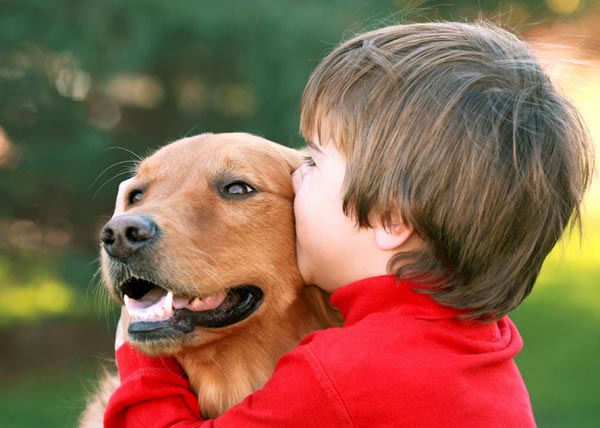
We humans like to retrieve of ourselves as a special agglomeration, but information technology turns out we have plenty in common with other animals. Math? A monkey can do it. Tool use? Hey, fifty-fifty birds have mastered that. Civilization? Sorry, folks — chimps have information technology, too.
Here's a list of some of the top parallels between humans and our brute kin. Y'all may exist surprised at how similar we are to even our afar relations.
Ears Like a Katydid
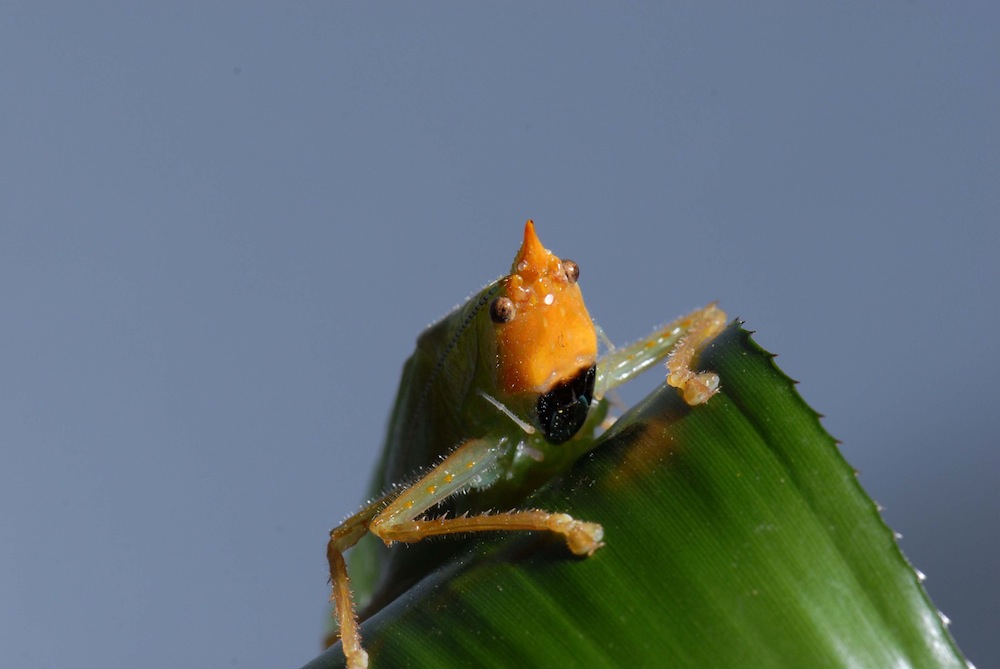
Humans have circuitous ears to interpret audio waves into mechanical vibrations our brains tin process. So, as information technology turns out, exercise katydids. According to inquiry published Nov. xvi, 2012 in the journal Science, katydid ears are arranged very similarly to human being ears, with eardrums, lever systems to amplify vibrations, and a fluid-filled vesicle where sensory cells wait to convey information to the nervous system. Katydid ears are a fleck simpler than ours, but they can also hear far to a higher place the human range.
Worlds Like an Elephant
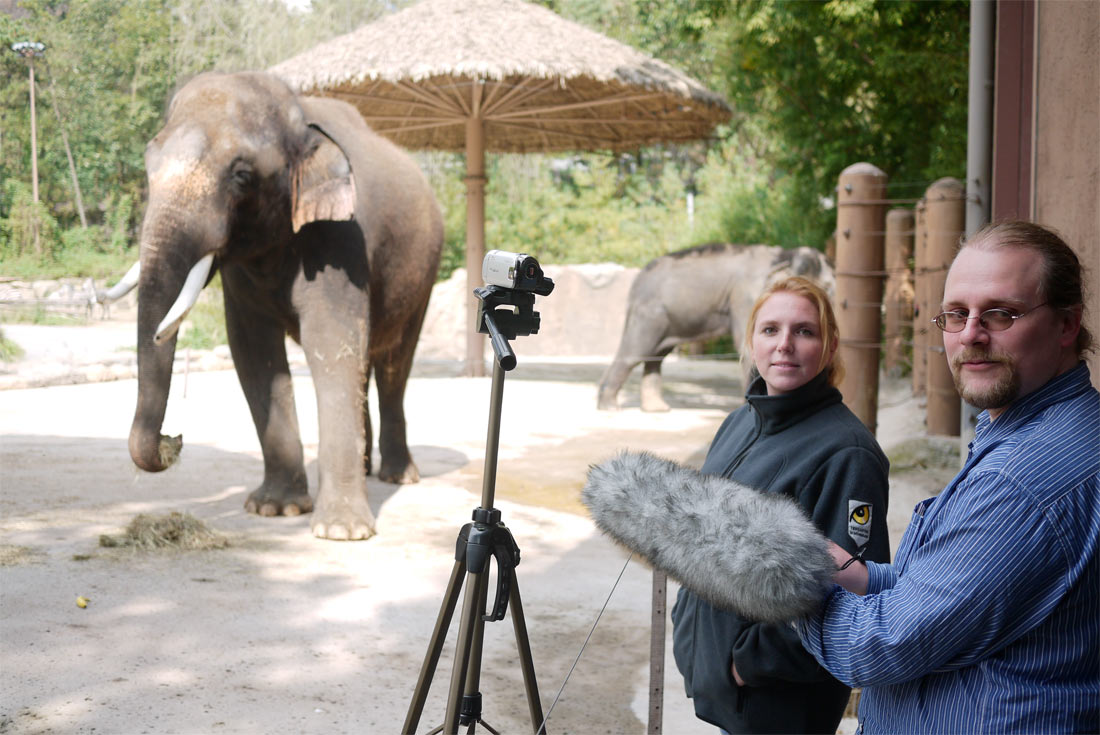
Humans do reign supreme in the arena of language (as far as we know), only even elephants can figure out how to make the same sounds we do. According to researchers, an Asian elephant living in a Southward Korean zoo has learned to utilize its trunk and pharynx to mimic human words. The elephant can say "hello," "good," "no," "sit down down" and "prevarication down," all in Korean, of form.
The elephant doesn't appear to know what these words mean. Scientists think he may take picked up the sounds because he was the just elephant at the zoo from when he was 5 to when he turned 12, leaving him to bond with humans instead.
The Facial Expressions of a Mouse

Do you brand weird faces when you're in pain? So practice mice. In 2010, researchers at McGill University and the University of British Columbia in Canada establish that mice subjected to moderate pain "grimace," simply like humans. The researchers said the results could exist used to eliminate unnecessary suffering for lab animals by letting researchers know when something hurts the rodents.
The Sleep-Talk of a Dolphin
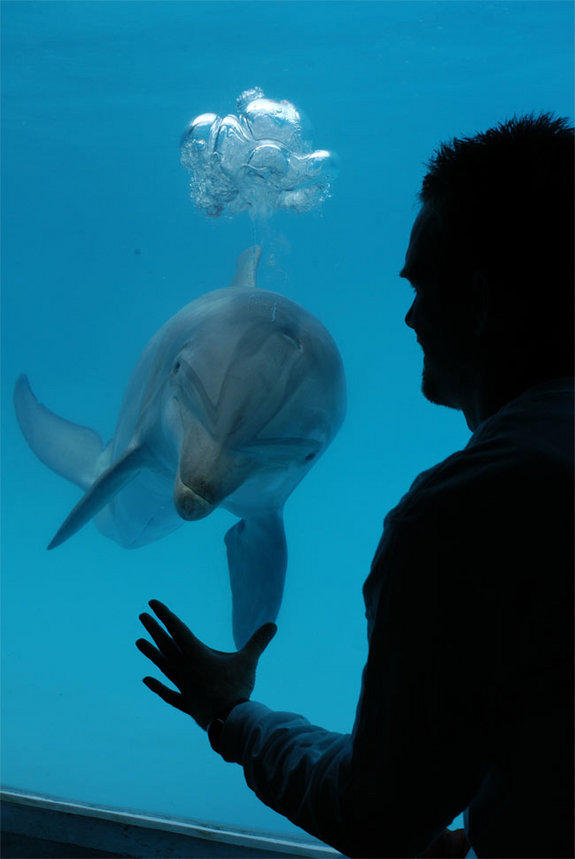
Dolphins may sleep-talk in whale song, according to French researchers who've recorded the marine mammals making the not-native sounds late at night. The five dolphins, which live in a marine park in France, have heard whale songs only in recordings played during the day around their aquarium. Merely at nighttime, the dolphins seem to mimic the recordings during rest periods, a possible class of sleep-talking. And you thought your nocturnal mumblings were weird.
The Firm-Building Skill of an Octopus
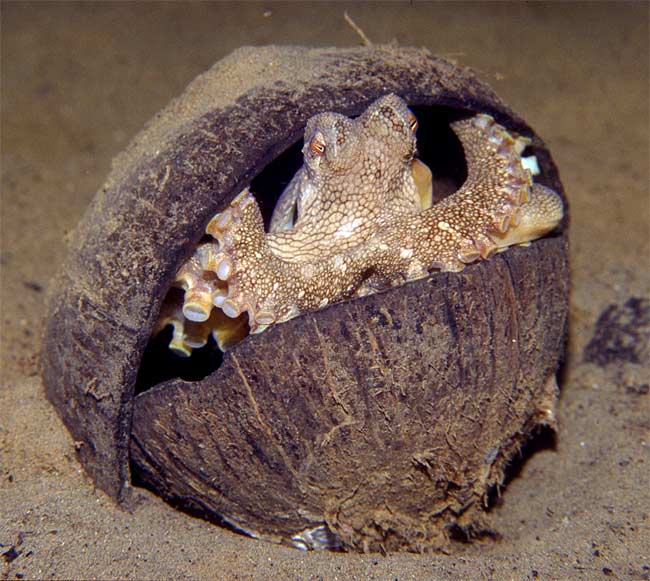
Okay, Frank Lloyd Wright's "Falling Water" information technology is not, but a home built by an octopus has the reward of existence mobile.
The veined octopus (Amphioctopus marginatus) tin make mobile shelters out of coconut shells. When the animal wants to move, all it has to practice is stack the shells like bowls, grasp them with potent legs, and waddle away along the bounding main flooring to a new location.
The Movements of a Brittle Star
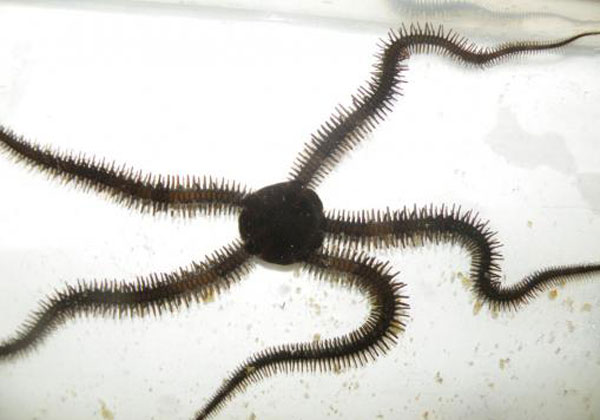
It'd exist hard to imagine an organism less like a human than a breakable star, a starfish-similar creature that doesn't even accept a cardinal nervous organization. And yet these five-armed wonders move with coordination that mirrors human locomotion.
Breakable stars accept radial symmetry, meaning their bodies tin be split into matching halves by cartoon imaginary lines through their artillery and cardinal centrality. Humans and other mammals, in comparison, accept bilateral symmetry: Y'all tin can split us in half one style, with a line drawn directly through our bodies. Most of the time, animals with radial symmetry move niggling or move up and downwards, like a jellyfish that propels itself through the h2o. Brittle stars, however, move forward, perpendicular to their body axis — a skill usually reserved for the bilaterally symmetrical.
Brain Like a Pigeon
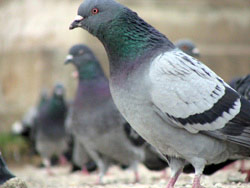
Gamblers in Vegas have something in common with pigeons on the sidewalk, and information technology's not just a fascination with shiny objects. In fact, pigeons brand gambles but like humans, making choices that leave them with less money in the long run for the elusive hope of a large payout.
When given a choice, pigeons will push a push that gives them a big, rare payout rather than ane that offers a minor reward at regular intervals. This questionable determination may stem from the surprise and excitement of the large reward, according to a study published in 2010 in the periodical Proceedings of the Majestic Society B. Human gamblers may be similarly lured in by the idea of major loot, no thing how long the odds.

Stephanie Pappas is a contributing writer for Live Science, covering topics ranging from geoscience to archaeology to the human being brain and behavior. She was previously a senior author for Live Science but is now a freelancer based in Denver, Colorado, and regularly contributes to Scientific American and The Monitor, the monthly magazine of the American Psychological Clan. Stephanie received a available'south caste in psychology from the University of Due south Carolina and a graduate document in science communication from the Academy of California, Santa Cruz.
Source: https://www.livescience.com/24807-ways-animals-humans-alike.html
Posted by: harnishfaillims90.blogspot.com
0 Response to "What If Animals Were As Smart As Humans"
Post a Comment